
What is Thanksgiving? History, Traditions, and Family Gratitude Practices
Thanksgiving Day is a national holiday celebrated in North America, primarily in the United States and Canada. At its core, it is organized to give thanks for the blessings and harvest of the past year. While it is celebrated on the fourth Thursday of November every year in the US, it is celebrated on the second Monday of October in Canada due to the harvest season ending earlier.
This day has evolved into a cultural "gathering" holiday rather than sticking to religious origins. It has a universal theme where people share the same table with their loved ones regardless of religion, language, or race, and feel gratitude for the beauties in their lives.
History of Thanksgiving: From 1621 to Present
The roots of Thanksgiving date back to the colonization period of the American continent, specifically to the year 1621.
First Encounter (1621): The group calling themselves "Pilgrims," setting out from England in search of religious freedom, arrives in Plymouth, Massachusetts after a difficult sea voyage. The first winter is very harsh, and half the population loses their lives. However, the native Wampanoag tribe teaches the new settlers how to plant corn, fish, and avoid poisonous plants.
Harvest Celebration: Following the successful harvest obtained in the autumn of 1621, English settlers and Wampanoag natives hold a feast lasting three days. This is accepted as the "first Thanksgiving" in history. The menu included not just turkey as it does today, but venison, duck, fish, oysters, corn, and pumpkin.
Official Holiday Declaration: It took centuries for Thanksgiving to become a national holiday. As a result of the 17-year letter campaign by author Sarah Josepha Hale (author of the poem Mary Had a Little Lamb), President Abraham Lincoln declared this day an official holiday in 1863, in the midst of the Civil War, to ensure national unity.
What is Done on Thanksgiving?
Modern Thanksgiving celebrations have remained faithful to their historical roots while being enriched with fun and social rituals.
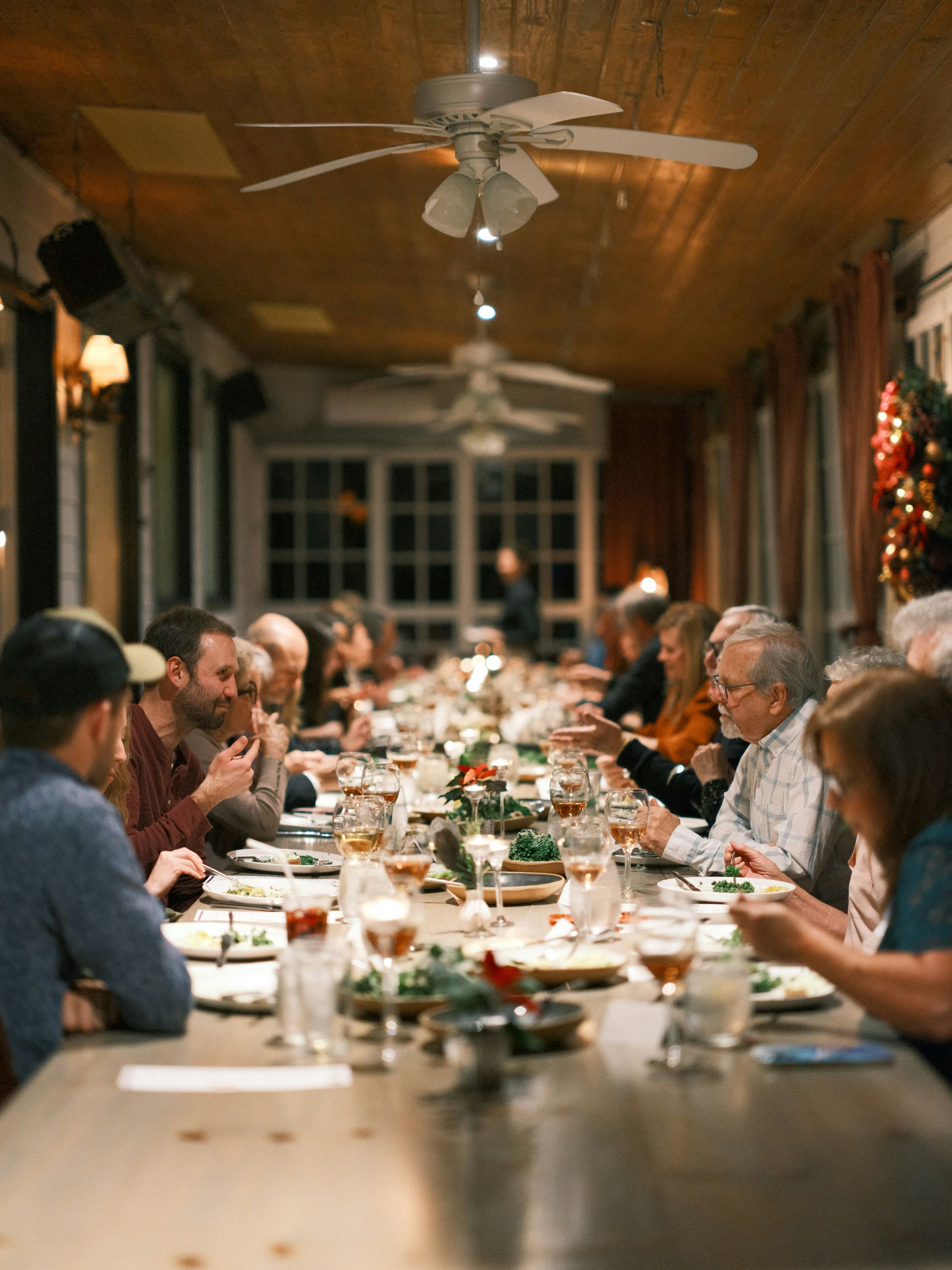
Traditional Family Dinner: The focus of the day is dinner. The crown jewel of the table is the stuffed and roasted turkey. Alongside it, cranberry sauce, mashed potatoes, green bean casserole, cornbread, and pumpkin pie for dessert are usually served.
Wishbone Tradition: The turkey's wishbone is dried and pulled by two people. It is believed that the wish of the person who gets the larger piece of the bone will come true.
Macy’s Parade: This parade held in New York, featuring giant balloons and marching bands, is watched live on television in the early morning hours.
American Football: Sprawling on the couches as a family after the meal to watch NFL (National Football League) games is an indispensable tradition.
Gratitude Circle: Before the meal, everyone takes turns voicing aloud what they are most thankful for that year.
How Can We Keep a Joint Gratitude Journal with Our Families?
The answer to the question of what kind of activities we can do that both increase our togetherness with our family and carry the spirit of Thanksgiving, apart from these traditional rituals, is as follows:
1. "Gratitude Jar" Method
This method is especially fun for families with children.
How to Do It: Place an empty jar, small papers, and pens in a common area of the house.
Application: Until Thanksgiving (or throughout the whole year), family members write down small moments they are grateful for and throw them into the jar. Like "The pancakes my dad made," "Sunny weather," "My brother helping me." This writing activity can be done repeatedly as it comes to mind throughout the day.
Big Moment: At the Thanksgiving dinner, the jar is opened, and all notes are read aloud. These moments bring forgotten happiness back to life.
2. Tablecloth Journal
It is a great idea for a lasting and visual memory.
Material: A plain color (preferably white or cream) linen tablecloth and textile pens.
Application: At every Thanksgiving dinner, everyone at the table writes their name, the date, and what they are thankful for that year on the tablecloth.
Result: As years pass, this cloth turns into a living history book full of memories, witnessing your family's past, growth, and gratitude.
3. Keeping a Family Journal Together
If you want to accumulate a more organized and literary memory, the classic notebook method is one of the most effective tools.
Material: A hardcover and high-quality notebook chosen specially for the family (Thanksgiving Notebook).
Application: This notebook stays in a place accessible to everyone in the living room. Throughout the year or just during Thanksgiving week, family members add the events, people, or lessons they are grateful for that year to the notebook in their own handwriting. Small children can also participate by drawing pictures.
Tradition: After every Thanksgiving dinner, what was written in past years is read aloud. In this way, how the family overcame difficulties and how they accumulated beautiful memories is remembered. This notebook becomes one of the most valuable legacies to be passed from generation to generation.
4. Digital Gratitude Journal
Besides the classic journal, keeping a digital gratitude journal can be a nice alternative to make memories more permanent and ensure that distant family members can also participate in the memory part.
Material: A digital journal subscription (For example: Apps like Serica, etc.).
Application: You can create a common text in a digital environment by writing down the situations you are thankful for in order throughout the year. You can enrich your memories by adding not just text but also photos taken that day or audio recordings to the journal. Thus, you leave behind rich-content memories with fresh emotions for the next year.
Advantage: You can accumulate your memories on a timeline for years and store them without the risk of physical wear and tear (deformation). Additionally, you can safely archive many details reflecting the gratitude, happiness, and atmosphere of that day, such as photos, videos, and audio recordings.